IR Insights: Recapping the Phase 3 INTerpath-001 Results
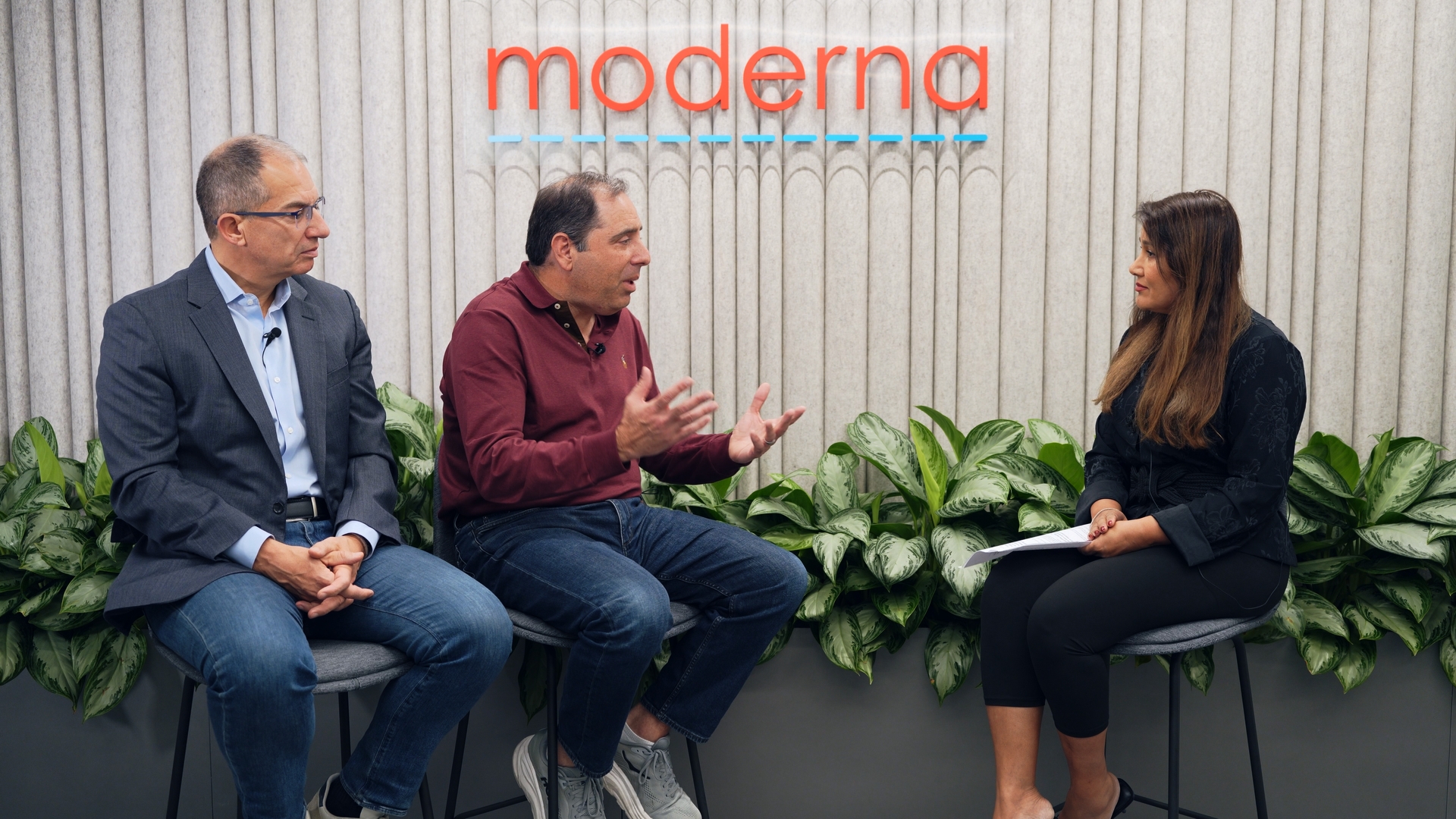

For more than a decade, we have pursued a scientific hypothesis: Could we use mRNA to train and activate the immune system to recognize and attack cancer cells based on the unique genetic mutations of an individual patient's tumor?
We knew that T cells could recognize abnormal proteins expressed by cancer cells, but tumors can be difficult for the immune system to distinguish from healthy tissue, and they can also evade or suppress immune recognition. We believed mRNA could help sharpen that recognition by directing the immune system toward the unique tumor-specific mutations in each patient’s cancer—making those cancer cells easier to identify against the surrounding biological noise.
Today, we are seeing that scientific hypothesis translate into Phase 3 clinical evidence.
With our partners at Merck, we announced detailed results from the Phase 3 INTerpath-001 trial evaluating intismeran autogene (intismeran; also referred to as V940 or mRNA-4157), an investigational individualized neoantigen therapy, in combination with pembrolizumab, in patients with completely resected stage IIB-IV melanoma. Presented during a Presidential Symposium at the European Society for Medical Oncology (ESMO) Congress 2026, these findings offer important insights into the potential of individualized cancer treatment.
A Closer Look at the Phase 3 INTerpath-001 Results
For patients with high-risk melanoma, surgery is an important step in treatment, but it does not eliminate the possibility that cancer will return or spread to other parts of the body. Even if patients receive the standard of care after surgery, pembrolizumab, there is still significant risk that the cancer will return. This is the challenge we are working to address through INTerpath-001, a global, randomized, double-blind Phase 3 trial involving 1,137 patients with completely resected stage IIB-IV melanoma. The study evaluated whether adding intismeran to pembrolizumab as adjuvant treatment improved outcomes compared with pembrolizumab alone.
The results provide important evidence supporting the potential benefit of an individualized neoantigen therapy approach. At the primary prespecified analysis in the intent-to-treat (ITT) population, after a median follow-up of 24.6 months, intismeran plus pembrolizumab demonstrated a statistically significant improvement in recurrence-free survival (RFS), the trial's primary endpoint. The combination reduced the risk of recurrence or death by 42% (hazard ratio [HR]=0.58; 95% confidence interval [CI], 0.45–0.75; p<0.001) compared with pembrolizumab alone. In a prespecified sensitivity analysis of the modified intent-to-treat (mITT) population, which excluded patients who did not receive at least one planned dose of intismeran or placebo, the reduction was 49% (HR=0.51; 95% CI, 0.39–0.67).
An important finding was how the treatment effect changed over time. During the first six months, intismeran plus pembrolizumab was comparable with pembrolizumab alone for the risk of recurrence or death (HR=0.99; 95% CI, 0.66–1.49). After six months, following the intismeran immunization regimen, a prespecified sensitivity analysis showed a greater difference between treatment arms, with the combination reducing the risk of recurrence or death by 58% (HR=0.42; 95% CI, 0.30–0.58) compared with pembrolizumab alone. This pattern is consistent with the results observed in the Phase 2 study.
The safety profile of intismeran plus pembrolizumab was generally consistent with previously reported studies of the combination, with no new safety signals observed. Grade 3–5 treatment-related adverse events occurred in 14.2% of patients receiving the combination compared with 13.4% receiving pembrolizumab alone. The most common adverse events in the combination group were fever (52.2%), injection site pain (51.0%) and fatigue (38.5%).
The Science Behind Individualized Neoantigen Therapy
As cancer cells develop and multiply, they accumulate genetic mutations that distinguish them from healthy cells. Some of these mutations produce abnormal proteins, known as neoantigens, that can be recognized by the immune system as foreign. However, not every mutation generates an effective immune response, and tumors can develop mechanisms to evade detection.
Intismeran is designed to address this challenge by using the genetic characteristics of a patient's tumor to generate a targeted immune response. The process begins with a tumor and normal blood sample, which is analyzed to identify mutations specific to the tumor. Computational methods are then used to select up to 34 patient-specific neoantigens predicted to be recognized by the immune system to generate an antitumor immune response. These are encoded into an mRNA sequence, creating a medicine tailored to that patient's cancer.
Intismeran is being evaluated in combination with pembrolizumab, an anti-PD-1 immunotherapy that blocks inhibitory signals that can limit T-cell activity. The two therapies address different parts of the immune response: intismeran is designed to generate and expand tumor-specific T-cell responses, while pembrolizumab blocks an inhibitory signal that can restrain those T cells.
Future of Individualized Cancer Treatment
What makes these findings particularly meaningful is what they tell us about the potential of individualized cancer treatment. INTerpath-001 provides Phase 3 evidence that a therapy designed around the unique mutations of a study patient’s tumor improved clinical outcomes when combined with pembrolizumab in resected stage IIB-IV melanoma.
The study also provided an important operational proof point. Although each patient’s intismeran is individually designed, the process used to create and deliver it is standardized — spanning tumor and blood sampling, sequencing, computational neoantigen selection, manufacturing, chain-of-identity controls, distribution and administration. In INTerpath-001, intismeran was successfully manufactured for more than 99% of patients randomized to receive it, demonstrating that a fully individualized mRNA therapy can be executed reliably within a large, global Phase 3 program.
For the field, these results move individualized neoantigen therapy from scientific promise to Phase 3 clinical validation in melanoma. They also raise the next set of questions: Where else can this biology be used? Which patients are most likely to respond? And how can continued learning from each patient’s tumor, selected neoantigens, immune response and clinical outcome help us further improve the approach?
Together with Merck, we are continuing to address those questions through the broader INTerpath clinical development program, which includes nine Phase 2 and Phase 3 clinical trials across multiple tumor types and stages of disease, including three ongoing Phase 3 trials in non-small cell lung cancer.
Progress like this reflects more than a decade of scientific innovation and collaboration across Moderna and with our partners at Merck. To the teams across research, development, clinical, manufacturing, digital, regulatory and every function that has contributed to this work: thank you. And to the patients, families and investigators who have made this research possible, we are deeply grateful. Your contributions have brought us to this important milestone and continue to shape what may be possible for patients in the future.
Forward-Looking Statements
This post and accompanying video contain forward-looking statements within the meaning of the Private Securities Litigation Reform Act of 1995, as amended, including statements regarding: the potential of intismeran, including its potential in other tumor types and across settings; efficacy and safety data; the potential for data to improve with longer follow up; the potential commercialization of intismeran; the potential of mRNA in oncology; Moderna’s manufacturing readiness; engagement with regulatory authorities; the potential for approval of intismeran in 2027; the favorable trend in overall survival data; the advancement of the INTerpath clinical development plan; the read-across from intismeran to mRNA-4194; and the potential of the investigational mRNA-4194 in Lynch syndrome. In some cases, forward-looking statements can be identified by terminology such as "will," "may," "should," "could," "expects," "intends," "plans," "aims," "anticipates," "believes," "estimates," "predicts," "potential," "continue," or the negative of these terms or other comparable terminology, although not all forward-looking statements contain these words. The forward-looking statements in this post are neither promises nor guarantees, and you should not place undue reliance on these forward-looking statements because they involve known and unknown risks, uncertainties, and other factors, many of which are beyond Moderna's control and which could cause actual results to differ materially from those expressed or implied by these forward-looking statements. These risks, uncertainties, and other factors include, among others, those risks and uncertainties described under the heading "Risk Factors" in Moderna's Annual Report on Form 10-K for the fiscal year ended December 31, 2025, filed with the U.S. Securities and Exchange Commission (SEC), and in subsequent filings made by Moderna with the SEC, which are available on the SEC's website at www.sec.gov. Except as required by law, Moderna disclaims any intention or responsibility for updating or revising any forward-looking statements contained in this post in the event of new information, future developments or otherwise. These forward-looking statements are based on Moderna's current expectations and speak only as of the date of this post.